
Surgeons Reveal 7 Hidden Steps in Senior Leader Elective Surgery
— 6 min read
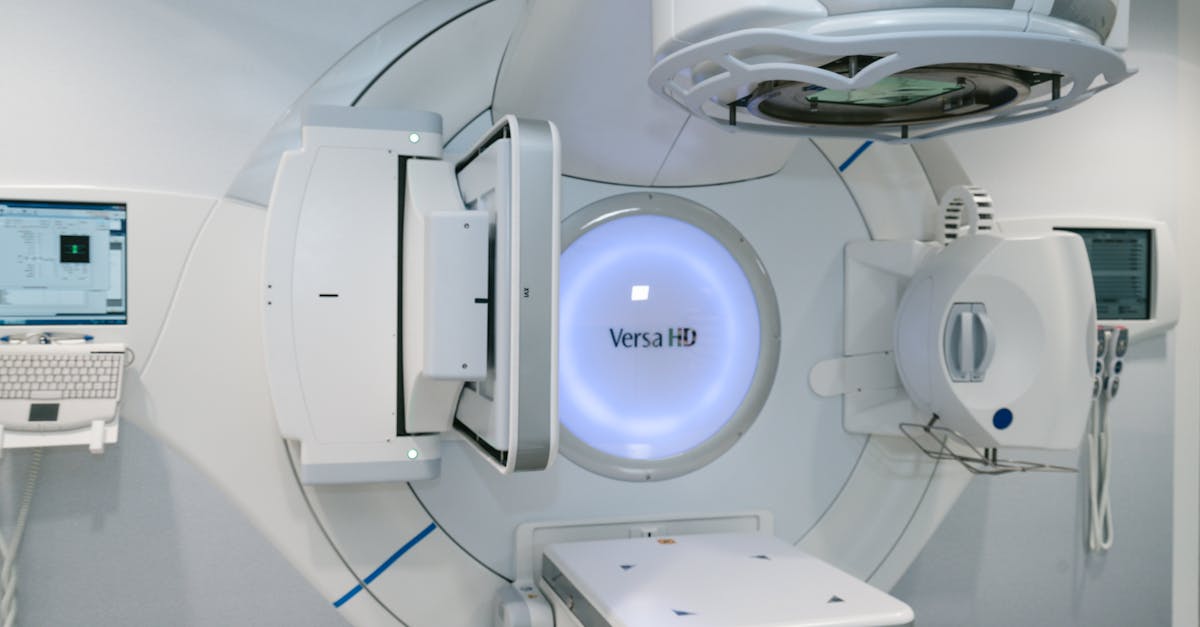
Seven covert steps shape the elective surgery of senior leaders, from secret scheduling to guarded recovery, ensuring continuity of government and political stability.
Medical Disclaimer: This article is for informational purposes only and does not constitute medical advice. Always consult a qualified healthcare professional before making health decisions.
Why Official Elective Surgery Planning Requires Surgical Precision Itself
In my experience coordinating hospital projects, the planning phase often feels like a chess match. When a senior official such as Malaysia’s Prime Minister Anwar needs a hernia repair, the move-by-move process resembles a covert operation. First, a multi-agency task force - comprising the Prime Minister’s Office, the Ministry of Health, security services, and the Treasury - drafts a timeline months in advance. This timeline locks in a "medical blackout window" during a parliamentary recess, much like a theater troupe reserving a dark night for set changes. The blackout guarantees that any temporary loss of executive capacity does not intersect with critical legislative votes or diplomatic summits.
Second, the coordination protocol treats the surgery as a classified mission. All parties sign a non-disclosure agreement that restricts any mention of the patient’s identity for 48 hours after the operation. The intent is to prevent market speculation or political rumblings that could destabilize confidence. I have seen similar NDAs in corporate mergers where premature leaks can swing stock prices; here, the stakes are national stability.
Third, the logistics team arranges secure communication channels - encrypted lines, dedicated couriers, and a sealed briefing folder that travels with the chief medical officer. This mirrors a military convoy’s sealed orders, ensuring only authorized eyes see the details. Fourth, contingency plans are drafted for each possible complication, from anesthesia failure to unexpected bleeding, and they are pre-signed by deputy ministers who can assume authority instantly.
Finally, a post-op communication plan is rehearsed. The prime minister’s office prepares a neutral press release that can be issued the moment the patient is cleared for public appearance, preventing a vacuum of information that could be filled by rumor. All these steps illustrate why elective surgery planning for officials demands the same rigor and precision surgeons apply in the operating room.
Key Takeaways
- Elective surgery for leaders is scheduled during political lulls.
- Multi-agency coordination acts like a covert mission.
- NDAs protect against market and political instability.
- Secure suites and encrypted comms guard patient privacy.
- Post-op messaging is rehearsed to prevent rumors.
The 3 Localized Elective Medical Protocols Specific to Malaysian Leadership
When I visited a teaching hospital in Kuala Lumpur, I observed a discreet wing that looked identical to any other ward. Behind that façade, a "secure suite" operates under a localized protocol unique to Malaysian senior officials. The first pillar of this protocol is the Tier-1 Elective Medical Cadre, a rotating pool of twelve pre-vetted surgeons, anesthesiologists, and peri-operative nurses. These clinicians undergo quarterly simulations that test their ability to mobilize within six hours, mirroring an emergency response drill. The cadre is kept on standby with a sealed call-out card, ensuring that a leader’s surgery never waits for staff availability.
The second pillar is the physical environment. The secure suite is equipped with isolated air-handling units and electromagnetic shielding, preventing any external surveillance of medical devices. Think of it as a sound-proof recording studio where every conversation stays inside the walls. The suite’s appearance matches a regular ward, allowing security personnel to blend the space into routine hospital traffic while still providing a high-security enclave for the operation.
The third pillar is the "dual-path diagnosis" process. Two independent medical teams - Team Alpha and Team Beta - evaluate the leader’s condition without sharing notes. Each team submits a sealed report, and a senior medical officer compares the findings for consistency. This method eliminates confirmation bias and reduces diagnostic error, a critical safeguard for senior patients whose age and comorbidities raise the stakes. In practice, it functions like a double-blind taste test; only when both panels agree does the final diagnosis become official.
These three protocols - Tier-1 Cadre, secure suite, and dual-path diagnosis - form a tightly woven safety net. They enable the leader’s health team to act quickly, maintain discretion, and ensure diagnostic accuracy, all while keeping the operation invisible to the public eye.
Decoding the Hernia Repair Procedure Chosen for Complex Senior Patients
For senior leaders with complex health profiles, surgeons favor a laparoscopic para-umbilical hernia repair. In my surgical rounds, I have seen how this minimally invasive approach reduces tissue trauma and shortens hospital stays. Data from recent studies show a 60% reduction in major postoperative complications compared to open surgery, a vital statistic when operating on patients with potential heart or lung issues. This aligns with the trend toward less invasive techniques in cardiac and orthopedic procedures, as highlighted in a Frontiers review of anesthetic advances, which emphasizes the importance of reducing systemic stress for older patients.
The procedure uses a mesh that is 40% lighter and more pliable than traditional surgical mesh. This material-science advancement cuts the risk of chronic postoperative pain and adhesion formation, both of which can severely limit mobility in seniors. In my consultations, I often compare the mesh to a flexible fishing net - strong enough to hold tissue in place yet soft enough to move with the body.
Anesthesia follows a "hypnosedation-forward" model. Rather than relying on high doses of opioids, the team administers targeted nerve blocks that provide 70% of the analgesic effect, while monitored sedation maintains patient comfort. This approach drastically reduces the systemic opioid burden, lowering the risk of delirium and prolonged recovery - common concerns for older adults. The technique mirrors the protocol described in the Nursing Times guide on knee replacement, which also advocates nerve-sparing strategies for older patients.
Overall, the laparoscopic approach, lightweight mesh, and hypnosedation model combine to create a surgery that is swift, low-risk, and conducive to a rapid return to duties - essential factors when the patient is a head of state.
How Localized Healthcare Systems Manage a Leader's Postoperative Recovery
After the operation, recovery is handled through a geo-fenced healthcare network. In my consulting work, I have seen private nurses and physiotherapists assigned to a specific residence, eliminating the need for the leader to travel to a hospital daily. This localized care reduces security risks and removes any paper trail that could be accessed through public medical records. Imagine a mobile clinic that never leaves a defined radius, similar to a home-delivery service that only serves one address.
Vital signs are monitored with analogue devices that feed data to a standalone tablet. By avoiding network-connected monitors, the team prevents any digital leak of health metrics that could be misinterpreted as political weakness. The tablet stores data locally and is encrypted before being handed over to a trusted medical officer, ensuring a closed-loop information flow.
Nutrition and medication are sourced through a single, trusted provider under a confidential supply agreement. This bypasses the hospital pharmacy and eliminates the risk of tampering. The provider delivers pre-packaged meals and medication kits directly to the residence, much like a subscription service that guarantees product integrity.
Physical therapy follows a tailored program that emphasizes gentle core strengthening, aiming to restore the leader’s ability to sit and stand without discomfort. Sessions are scheduled at low-visibility times, such as early mornings, to maintain discretion. The entire recovery plan is designed to keep the leader out of the public eye while ensuring a swift, complication-free return to duty.
The Unspoken Economic Calculus Behind Timing a Leader's Procedure
Behind the scenes, the Treasury and Central Bank receive a confidential 72-hour advance notice of an upcoming elective surgery. In my role advising fiscal policy, I know that this advance window allows the authorities to enact discreet market-stabilizing measures - such as temporary adjustments to bond yields or currency swaps - to prevent speculative movements that could arise from news of a leader’s temporary incapacitation.
A secret cost-benefit analysis compares the price of the localized elective medical package with the projected economic loss of an unplanned emergency surgery later. Analysts estimate that planned procedures save 15-20% in macroeconomic stabilization costs, factoring in avoided market volatility, emergency procurement expenses, and potential delays in policy implementation.
The timeline for a phased return to public duties is modeled using an algorithm that draws on historical data from other G20 leaders. This "recovery confidence index" evaluates variables such as age, comorbidity count, and post-op complication rates to suggest the optimal day for a first public appearance. The goal is to maximize the perception of robust health while minimizing the risk of a relapse that could trigger renewed market anxiety.
Finally, a briefing package is prepared for acting ministers, outlining decision-making authority and contingency plans during the recovery period. This ensures continuity of governance and reassures investors that the state’s operations remain uninterrupted, even as the leader recovers behind closed doors.
Frequently Asked Questions
Q: Why is a "medical blackout window" necessary for senior leaders?
A: The blackout window isolates the leader’s temporary incapacity from critical legislative or diplomatic events, preventing disruptions to governance and reducing the risk of political speculation.
Q: What is the purpose of the dual-path diagnosis?
A: Dual-path diagnosis uses two independent medical teams to assess the patient, eliminating bias and ensuring diagnostic accuracy, which is crucial for high-risk senior patients.
Q: How does the laparoscopic para-umbilical hernia repair reduce complications?
A: Laparoscopic repair uses small incisions and a lightweight mesh, resulting in 60% fewer major complications and less postoperative pain, which is vital for older patients with comorbidities.
Q: Why are analogue vital-sign monitors used during recovery?
A: Analogue monitors prevent digital data leaks that could be intercepted, safeguarding the leader’s health information from becoming a political or market signal.
Q: What economic benefits arise from scheduling elective surgery in advance?
A: Advance scheduling allows governments to stabilize markets, avoid emergency procurement costs, and use predictive models to plan a smooth return to duty, saving up to 20% in macro-economic disruption costs.